

Drinking water analysis — how long until the results arrive?
Eurofins Estonia
You've ordered a water test, taken the sample and shipped it back to the lab. Now the question on your mind is — when will I get my results? The short answer is that water analysis typically takes up to two weeks. So why does it take that long, and what actually happens during that time?
In this article we walk through the whole process — from sampling all the way to results landing in your inbox — so you know exactly what to expect.
How long does drinking water analysis take through veetest.ee?
- Sampling kit ships within 24–72 h. You'll get an order confirmation and the kit goes out — weekends accounted for.
- Kit arrives at your door, +1 day. Depending on parcel locker availability and courier capacity.
- You send the sample back within 24 h. Take the sample, then ship it straight away — the microbiology sample must reach the lab within 24 hours.
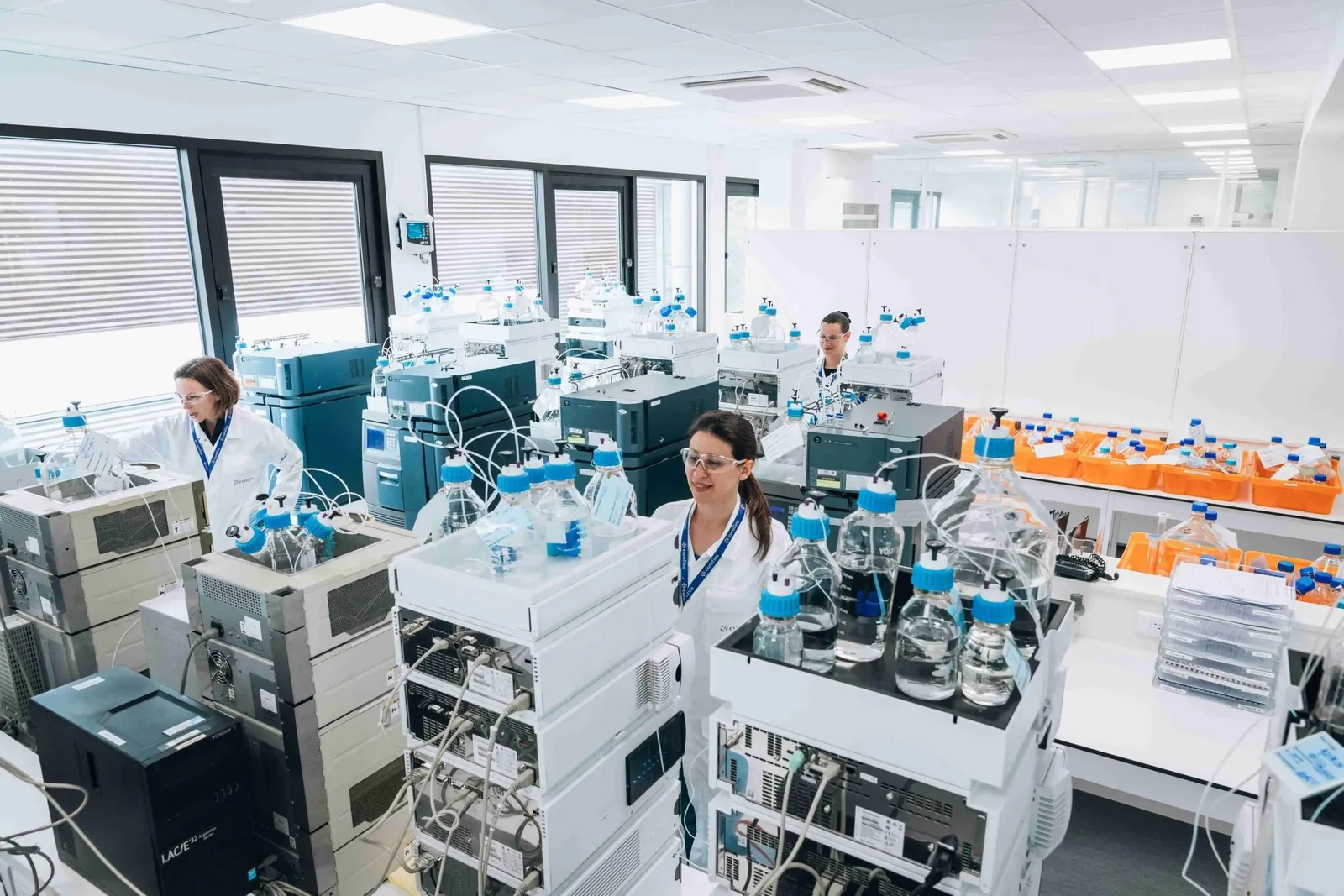
- Lab analysis takes up to 2 weeks. Eurofins' ISO 17025 laboratory runs the analyses according to standardised methods.
- Results emailed the moment they're ready. Together with a detailed analysis report.
Sample intake: before the analysis even starts
The full journey from order to results normally takes two weeks. One reason is that when the sample arrives, the lab first has to confirm it meets requirements. To do that, it answers a few questions:
- Is there enough sample volume?
- Does the sample look representative — no debris or solids in it?
- Is the bottle intact and made of a suitable material?
- Did the sample arrive in the right condition — cool, and quickly enough after collection?
- Is all the paperwork there — who ordered it, what needs to be measured?
Most of these are taken care of automatically by ordering through Veetest.ee, which ships a lab-approved sampling kit and includes instructions. Once everything checks out, the interesting part begins.
What does the lab do with your sample?
Some tests are fast — odour, for example. But most analyses go through several steps before you get a result:
- Instrument check. Before each analysis day the lab verifies that every instrument is calibrated and behaves as expected — using purpose-made control solutions, including one whose composition closely matches the sample and is fully known to the lab.
- Sample preparation. For some analyses the sample is converted into a chemical form in which the analyte concentration can be measured more accurately.
- The sample is split into sub-samples. Different substances need different procedures, so the sample is divided up — never analysed straight from the sampling bottle, always pipetted in exact volumes into the right analytical vessel.
- Reaction time. Some analyses require a fixed amount of time for the reaction to complete. That isn't arbitrary — it's a protocol that has to be followed exactly.
- Microbiology takes time. To detect bacteria the sample is incubated under controlled conditions. Identifying E. coli and coliform bacteria alone takes 24–48 hours of incubation. Each step follows a strict laboratory procedure so the result is trustworthy.
- Running the analysis. Some methods take minutes, but starting an instrument up, warming it through, and pushing the sample through it can together take several hours.
- A fixed order of operations. Not all analyses happen at once. Chloride, for example, can't be measured until the sample's pH has been measured first. The lab parallelises the work between chemists, but the sequence still has to be right.
- Processing the results. For some analyses the raw measurement isn't the number that ends up in the report. The instrument signal may need additional calculation and conversion into a form suitable for reporting.
- Result review. The lab checks that the results make physical sense. If a measurement looks uncertain, it gets repeated before the report is issued.
- Issuing the report. A report is only released once every result is in and verified — never partially. That's why getting the results takes a little time and patience.
Lab workload
Eurofins isn't a small local lab. It's a large accredited laboratory analysing hundreds of samples in parallel. Samples are queued in the order they arrive, and every result goes through a two-stage check before it's released.
Why pick an internationally accredited lab?
A water analysis isn't just a number — it's a decision about whether the water is safe for your family. A rushed analysis at a small local lab may not be reliable. ISO 17025 accreditation guarantees that every result meets an internationally recognised quality standard.
What you can do to help the analysis start sooner
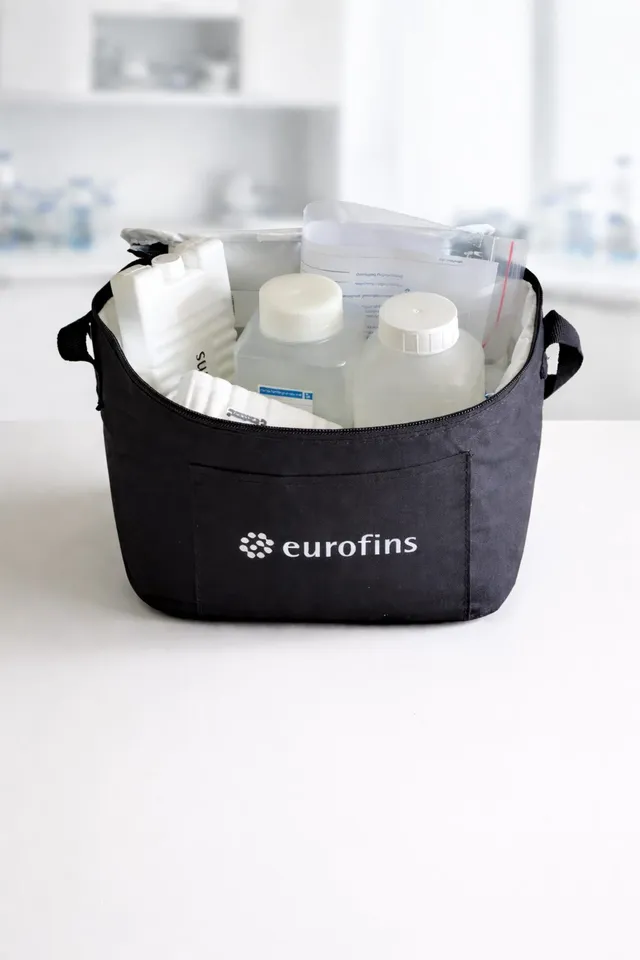
The lab's speed is fixed, but how quickly you prep on your end affects the entire start of the process:
- Take the sample as soon as the kit arrives — don't let it sit on a shelf.
- The microbiology sample has at most 24 hours to reach the lab — keep it cool. Send it back using the included cool pack. Don't forget the cool pack on a shelf or in the fridge; it's packed with the sample bottles for a reason.
- Follow the included instructions carefully — sampling errors may mean repeating the analysis.
- Ship the sample to the lab at the earliest opportunity — you can also call Eurofins Estonia and arrange to drop it off in person.
How will you get your results?
Results are emailed to you as a detailed analysis report the moment the lab finishes the work. You can compare them against the specific limit values from Estonian Ministry of Social Affairs Regulation 61, which is summarised on every package page on veetest.ee.
If the results flag a problem, you don't have to figure out the next step alone — our support team is reachable by email.
Related packages
Drinking Water Safety Test
A quick first check for your drinking water safety. Ideal for checking tap water in apartments, townhouses or a new home. Includes core microbiological and chemical parameters that meet the Estonian Ministry of Social Affairs’ drinking water requirements.
View package →Essential Well Water Test
Suitable for new well owners, peace of mind, and annual check-ups. Covers all common well water problems - bacteria, nitrates, iron, manganese and pH. Meets the Estonian Water Law requirements.
View package →Complete Well Water Analysis
The most comprehensive package for borehole and dug well analysis. 24 parameters cover all requirements set by Estonian Ministry of Social Affairs regulation No. 61. Suitable for property transactions, commissioning a new well, or in-depth inspections.
View package →